Featured
Table of Contents
Examples are AI-powered platforms like prompt improvements based upon user habits and do the recurring tasks themselves, therefore freeing developers to concentrate on a lot more complex concerns. Since as AI is incorporated in the advancement process, designers need to be upgrading their skills to be able to work as a whole with these brand-new tools.
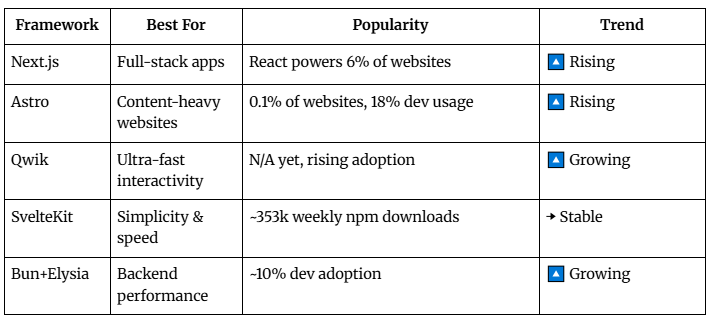
As AI is incorporated into the development process, relationship structure is not being left. Developers require to adapt their abilities to AI to enable their cooperation to progress to a greater level which results in continuous learning. These tools provide individuals who have extremely little coding knowledge the capability to create professional-looking web applications using their easy drag-and-drop interfaces.
Progressive Web Apps (PWAs) are altering the video game of user interfaces, combining web and mobile applications. PWAs resemble native apps in their functionalities such as offline usage, push alerts, and extremely fast load times are really easy to use provided they may be used through a browser. Since the energies of PWAs are increasingly more significant from time to time, this innovation will be the choosing element for front-end developers to protect the delivery smooth user experience on various devices.
Therefore, designers must focus on intuitive interfaces that reduce making use of these interfaces making them ideal to the various needs of various users; the advancement of accessible websites and info for individuals with disabilities is the way to go. The acquisition of a profound availability policy assists in more decision making by the manufacturers elsewhere.
In the process of building smaller sized independent services, groups can efficiently innovate and get immediate advantages from the applications they offer. This brand-new direction brings more variability into the development stage and allows designers to get the taste of a new feature without including the entire application. The design pattern that moves to the component-based style system is a noteworthy shift in user interface advancement.
The Evolution of Web Development beyond 2026
The provision of libraries like JavaScript can promote this kind of development (Eymer et al., 2017). Therefore, in 2025, building and construction employees will require these versions of the libraries to guarantee efficient software advancement along with the follow-up of cross-applicability guidelines. The integration of Voice Interface into web applications is getting more essential since of the development of voice-activated gadgets.
To enable voice interaction which is one of the features that improve ease of access and functionality, the designers should familiarize themselves with voice acknowledgment APIs that are used for voice availability and design the interfaces. I produced mine called Designers are focusing on building eco-friendly digital services as the worldwide problem of contamination requires individual options for programmers.
Developing sustainable practices on the front-end like having big images optimized is assisting designers to contribute to the efforts of the globe in regards to its sustainability in addition to to enhance application efficiency. Augmented Reality is now remaining in the web world as a special function relocating to mixing as an essential web application tool.
Best Practices to Optimizing Front-End Performance in 2026
In setting trends, a designer might desire to consider working with tools such as and to incorporate AR elements that enhance the user experience and make the job interactive. Given the rapid modifications in innovation, continuous knowing will be main to the development of front-end designers in 2025. Developers who are actively informed about what is trending, which frameworks and finest practices to accept gain a significant long lasting advantage in the market.
Front-end development in 2025 predicts paradigmatic changes that will be spurred by AI involvement, no-code options, terrific UX, and sustainable development. Embracing the trends and upgrading their abilities continuously, the designers can create applications that are not only easy to use but likewise are resource-efficient and carbon neutral. It's quite clear that front-end development has actually moved on from merely composing code; it's all about creativity and foresight to please all digital users regardless of the platforms.
Frontend advancement is changing quicker than ever. In between AI tools, new structures, and smarter architectures, developers need to develop to stay relevant.
Usage Case: Build React elements, tooltips, or animations using natural language. Pages require to fill quickly and rank well. SSR and SSG frameworks like and dominate for: Better SEO Lightningfast load times Pre-rendered material shipment (LinkedIn) Use Case: Blog sites, e-commerce, and content-heavy sites. (JavaScript, APIs, Markup) continues growingfast and safe websites delivered by means of APIs (LinkedIn).
Use Case: Massive apps with cross-team function shipment. CSS has actually developed: Utility-first frameworks like Atomic CSS construct tools (e.g., Panda CSS) Native CSS functions: nesting,: has(),: is(),: where() selectors (Reddit, Reddit) Usage Case: Clean, scalable stylesheets without CSS bloat. Beyond React and Vue, new players are increasing: assembles at build-time for tiny package sizes.
How Decoupled Development Future-Proofs Enterprise Digital Growth
Usage Case: Reusable UI libraries and frameworks with minimal client-side JS. When JS isn't enough: WASM runs languages like Rust, C++, or Go in the internet browser. Usage Case: Web-based games, imaging apps, immersive tools.
Subtle transitions, scroll-based effects, and hover animations bring interfaces to life. Tools consist of,, and CSS animations (LinkedIn, Medium). Usage Case: Feature highlights, control panel feedback, onboarding circulations. Trend Why It Matters Tools/ Examples AIAssisted Workflows Accelerate dev & reduces errors Copilot, ChatGPT, Stitch SSR/ SSG Direct SEO + quick UX, Jamstack & Micro Frontends Modular, scalable architecture Single-SPA, module federation Utility & Atomic CSS Constant, little CSS bundles Tailwind, Panda CSS Emerging Structures Performance & simplicity Svelte,, Web Components WebAssembly Near-native speed for heavy workloads Rust or Enter the internet browser Motion Design Engaging user interfaces Framer Motion, GSAP, CSS Animations Frontend is no longer just UIit's efficiency, accessibility, architecture, and yes, AI-powered workflows.
Which pattern excites you the most? Or what have you already attempted? Drop a commentI 'd love to hear what tools or tasks you're utilizing in real life!.
The front-end development area, in specific, is no stranger to changes as new innovations, advancement patterns, libraries, and structures keep emerging. Some current events that have changed how designers construct sites and web applications include the launch of Angular 17 with server-side rendering support, v14, and the increased adoption of TypeScript.

Latest Posts
How API-First Development Improve Digital ROI
Scaling Search Visibility Through Modern Data Analytics
Optimizing Web Platforms to Meet AEO Visibility Requirements