Featured
Table of Contents
Establishing an impactful material technique is no longer almost creativity and insight; it has to do with leveraging the power of synthetic intelligence (AI) to remain competitive, optimize ROI, and enhance workflows. For business online marketers, the stakes are even higher as the need for individualized, top quality, and scalable content grows throughout industries.
For business companies, this indicates: by recognizing high-performing topics and channels with automated workflows for content production and distribution through innovative analytics and audience understandingBy integrating AI into your content strategy, you can open new opportunities to enhance resources, conserve time, and preserve a competitive edge. A robust AI-driven content technique counts on these foundational aspects: AI tools can help enterprises create, analyze, and optimize material at scale.
From brainstorming ideas to crafting long-form material, these tools simplify workflows while making sure quality and relevance. For example, an AI-driven campaign targeting business CMOs may involve producing case studies, whitepapers, and post on executing AI services to accomplish marketing objectives. Your approach with AI can include: Personalization based on target market dataLanguage versatility to match brand toneIntegrated SEO optimization for higher visibilityTranslation and localization of all possessions for a worldwide launchCushman & Wakefield, one of the world's largest property services firms, structured jobs like creating taglines and crafting site copy by 50%, making it possible for copywriters to concentrate on tactical and impactful work.
Maximizing Traffic With Modern Content Optimization Tools
AI can streamline marketing research by evaluating large quantities of data quickly and generating actionable insights. The advantages of using AI tools for marketing research are:: AI analyzes search patterns, purchase patterns, and social media engagement to determine topics your audience cares about.: Tools like SEMrush, powered by AI, can track competitor performance, helping you determine spaces that your material can fill.: Deep research study with AI can help provide insights into emerging topics, enabling business to craft prompt and pertinent material.
AI-driven marketing automation guarantees that producing, handling, and distributing content ends up being scalable and effective. Here's what automation accomplishes:: AI tools can help simplify workflows, keeping cross-functional groups lined up on material calendars and deadlines.: AI can assist break down a core property like a report or webinar into derivatives, such as blog site posts, video clips, social networks posts, and email campaigns.: AI representatives can help run regular jobs, such as inspecting for SEO optimizations.
How Conversational Queries Impact Local SEOAI-driven SEO benefits include:: Usage AI (like Jasper's Optimization Agent) to select high-impact keywords like AI tools for market research study and perfectly integrate them into your content.: AI tools can determine keyword performance, backlinks, and rival standing.: Data from AI services can highlight where your brand can offer special worth, contributing to better search rankings.
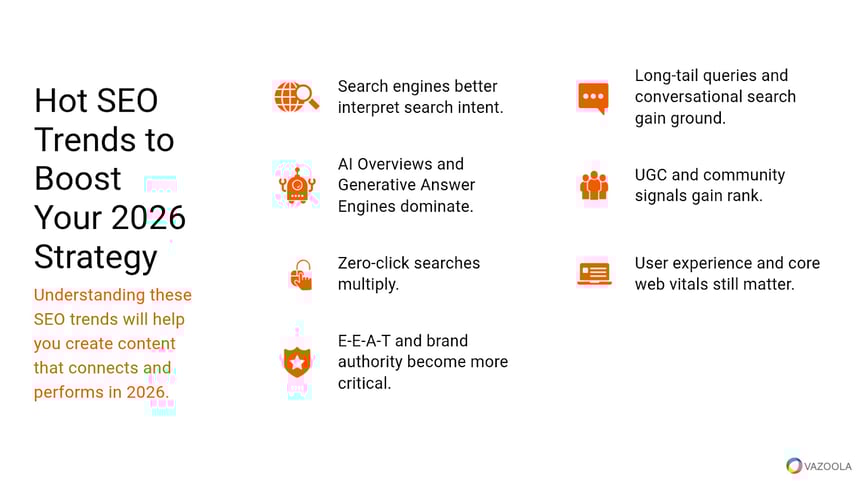
Is Your Strategy Ready for 2026 Search Trends?
With AI you can: Track conversion rates from content projects. For enterprises, ROI computation typically focuses on the financial effect of marketing automation and scalability enhancements driven by AI.
AI has revolutionized business material method, enabling companies to innovate, optimize, and outperform rivals. By adopting AI options for,, and, business can accomplish greater engagement, better ROI, and a more powerful competitive standing.
How Conversational Queries Impact Local SEODid you ever question how Spotify compiles its daily mix of tunes you wish to hear? Or how Netflix makes suggestions of films you make certain to delight in? Thank the marketing experts who are utilizing synthetic intelligence to absolutely no in on what customers most wish to see, hear, read, and purchase.
Routine jobs like writing copy, mining consumer information, and creating visuals that when took hours can now be done in minutes., author of "Marketing Analytics: A Comprehensive Guide and Marketing Metrics," and instructor at the Harvard Division of Continuing Education's Specialist & Executive Advancement, calls AI both an obstacle and a chance for those in marketing.
"It will be taken by an individual who understands how to use AI. So, it is extremely important for online marketers to know how to use AI." At present, numerous marketers are underutilizing AI, but the effect of AI in marketing is already transforming business landscape, assisting leaders make data-informed decisions with greater efficiency and precision.

How Voice Assistant Queries Redefine Keyword Strategy
While there are challenges ahead, the market is altering, and experts who want to future-proof their careers should master using AI. How will AI impact marketing? AI platforms like HubSpot, Consistent Contact, Mailchimp, and ActiveCampaign are already being utilized by marketers to automate tasks and enhance projects. The 2024 State of Marketing AI Report from the Marketing AI Institute says AI adoption is accelerating among marketing specialists, with many stating they use AI in digital tools in their everyday workflows and "couldn't live without AI." Decreasing time invested on recurring, data-driven tasks like content marketing, e-mail, social media, or consumer relationship management Gaining more actionable insights from data Speeding up profits development Opening higher value from marketing innovations According to Inge, marketers are using AI for market research, creating reports about the state of a market or sector, and showing ideas that can be later on executed on.
"It's a real performance chauffeur." While usage of AI innovation is clearly rising, there are still challenges to complete AI adoption, including the lack of: education and training awareness or understanding strategy skill with the best ability investment, both of time and of monetary resources "Right now, the vast majority of marketers are underutilizing AI.
AI has changed that method dramatically. Algorithms are now evaluating client interactions in real time, forecasting customer behavior and personalizing material.
Online marketers who once responded to consumer behavior can now predict it and develop customized campaigns. AI can collect, procedure, and evaluate easily searchable details like names, purchase histories, and website interactions, but can also mine unstructured data such as images, videos, and social media posts to gain insights about customer choices, brand name understanding, and shopping patterns.
How Voice Assistant Queries Redefine Search Strategy
Advanced chatbots and assistants can deal with client inquiries, recommend products, and total transactions in genuine time. By identifying products in images, virtual assistants can customize shopping experiences by notifying customers about comparable products they may like. AI is changing how companies engage with their audiences, making marketing more intelligent, data-driven, and responsive to specific client requirements.
Tools like Adobe Sensei and Google Marketing Platform allow online marketers to enhance their workflow by integrating data analysis, project management, and predictive modeling into a single interface. "I'm utilizing a tool called Blaze that helps you schedule your social media posts. It will give you an entire week or month's content calendar with the click of a few buttons.
Builds chatbots for e-commerce websites and social media platforms, generates leads and individualized email campaigns based upon consumer behavior and interests, produces social media campaigns, assists customers through acquiring processes, assists to conceptualize ideas, create strategies, and produce content. Generates ideas, drafts marketing strategies and blogs, and creates social media posts.

Latest Posts
Developing High-Performance Platforms Using New Tools
Is Your Strategy Ready for 2026 Search Shifts?
Will Automation Replace Standard SEO Tactics?